

Specialized Whirlpool Appliance Repair in San Francisco
Mon–Sat: 8:00 AM – 7:00 PM
Wet dishes at the end of a cycle often come from rinse aid, loading, a drying fault or a heating problem. Learn which are normal and which need a technician.
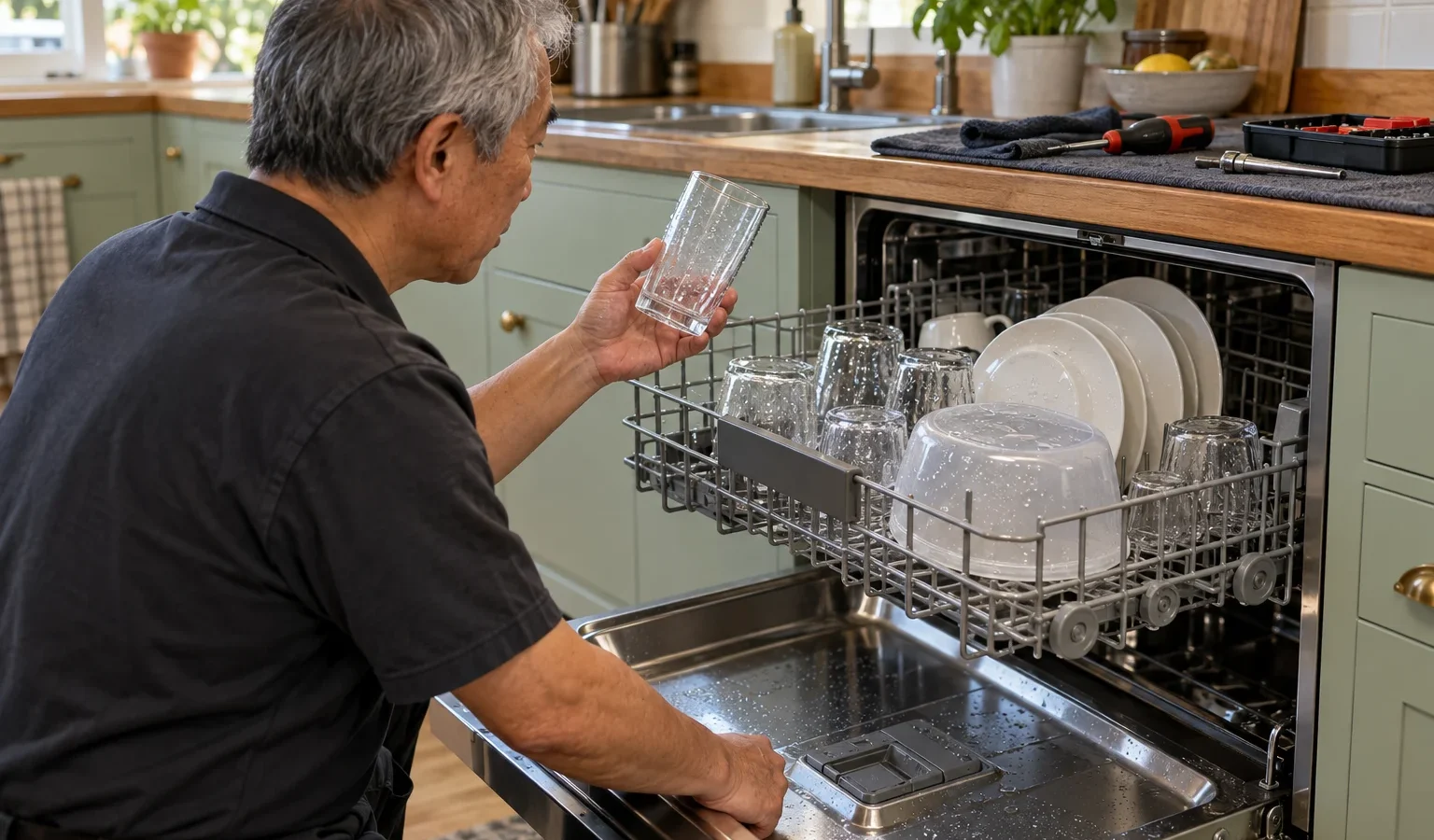
Opening the dishwasher to find dripping glasses and wet plates is annoying, especially when you wanted to put the dishes away. Some wetness is built into how modern dishwashers dry. The trick is telling normal results from a drying fault, so you know whether to adjust a habit or request a visit.
Drying depends on heat, time and the way water behaves on a surface. After the final rinse, hot dishes shed water as it evaporates. Many dishwashers add a heating element at the bottom of the tub or use a condensing approach where moist air meets the cool tub wall and drains away. A rinse aid helps water slide off in sheets instead of beads. If any of these pieces is missing, wet dishes follow.
Rinse aid. If the dispenser is empty, water beads and stays on the dishes. Refill it as the instruction sheet describes. If you use a combined detergent product and skip rinse aid, drying may suffer.
Cycle choice. A short or eco-style cycle may use less heat. Choose a cycle with a heated dry or extended drying option if your control offers one, and read the cycle descriptions in your manual.
Loading. Dishes that nest, face upward or overlap trap water. Angle bowls, leave space, and keep plastic on the top rack, away from the area near the heating element.
Opening the door early. Cracking the door at the end of the cycle lets moist air escape and cools the tub quickly. Letting it sit for a while helps condensation drying work.
Water that is not hot enough at the start. A kitchen faucet that runs cool for a moment, or a long pipe run from the water heater in a larger building, can make the first fill cooler. Run the hot tap at the kitchen sink until it warms before starting the dishwasher.
Heating element. If the element has failed, the tub never warms and the dishes dry poorly. You may notice that the door is not warm when the cycle ends.
Thermistor or temperature sensor. This sensor reports water temperature to the control. If it misreads, the control may shorten or skip heating. The F3E2 entry lists a potential cause of thermistor or OWI sensor.
Heating errors. The library lists F4E2 as a heating system code and F4E3 as a heating error. If you see either one, write it down and mention it when you request service.
Vent or fan. Some dishwashers have a vent that opens at the end of the cycle to let steam out, or a fan that moves air through. A vent that stays shut or a fan that does not run keeps humid air inside.
Control timing. If a control ends the cycle early or does not enter the drying phase, the heating and venting never happen.
Many San Francisco kitchens in older flats have long pipe runs, and water quality varies between buildings. A film or spotting on glasses, together with wet dishes, can point to mineral residue rather than a heating fault. A cloudy film that wipes off with a cloth is a residue issue; dishes that are simply wet and cold are a heat issue. Telling the technician which of the two you see speeds up the diagnosis.
Book when rinse aid, loading and cycle choices have been corrected and everything is still wet, when the tub stays cold, when a heating or thermistor code shows, or when the cycle seems to end sooner than it should. Please give us the model number, usually on the door edge or inside the tub rim, and tell us which cycle you used. Our visit begins with diagnosis, gives you a written estimate and proceeds only with your approval.
Learn more at Whirlpool dishwasher repair and the Whirlpool dishwashers page. For a Gold-series unit such as the Whirlpool GU2800XTVQ, the model page lists its on-record facts.
Plastic does not retain heat like glass or ceramic, so water on it does not evaporate. That is normal for most dishwashers and not a sign of a fault.
Yes. It changes how water clings to surfaces so it runs off instead of beading. An empty dispenser is a common reason dishes come out wet.
It can. Without heat in the tub, evaporation drying does not happen. A technician tests the element rather than replacing it by guess.
The tub often holds some warmth. A tub that stays cold after a full cycle can hint at a heating problem.
Letting the dishwasher sit a while before opening helps dishes dry. Opening early releases steam and cools the dishes before they finish drying.
Share a few details and we’ll confirm an appointment. Prefer to talk? Call us and we’ll help right away.