

Specialized Whirlpool Appliance Repair in San Francisco
Mon–Sat: 8:00 AM – 7:00 PM
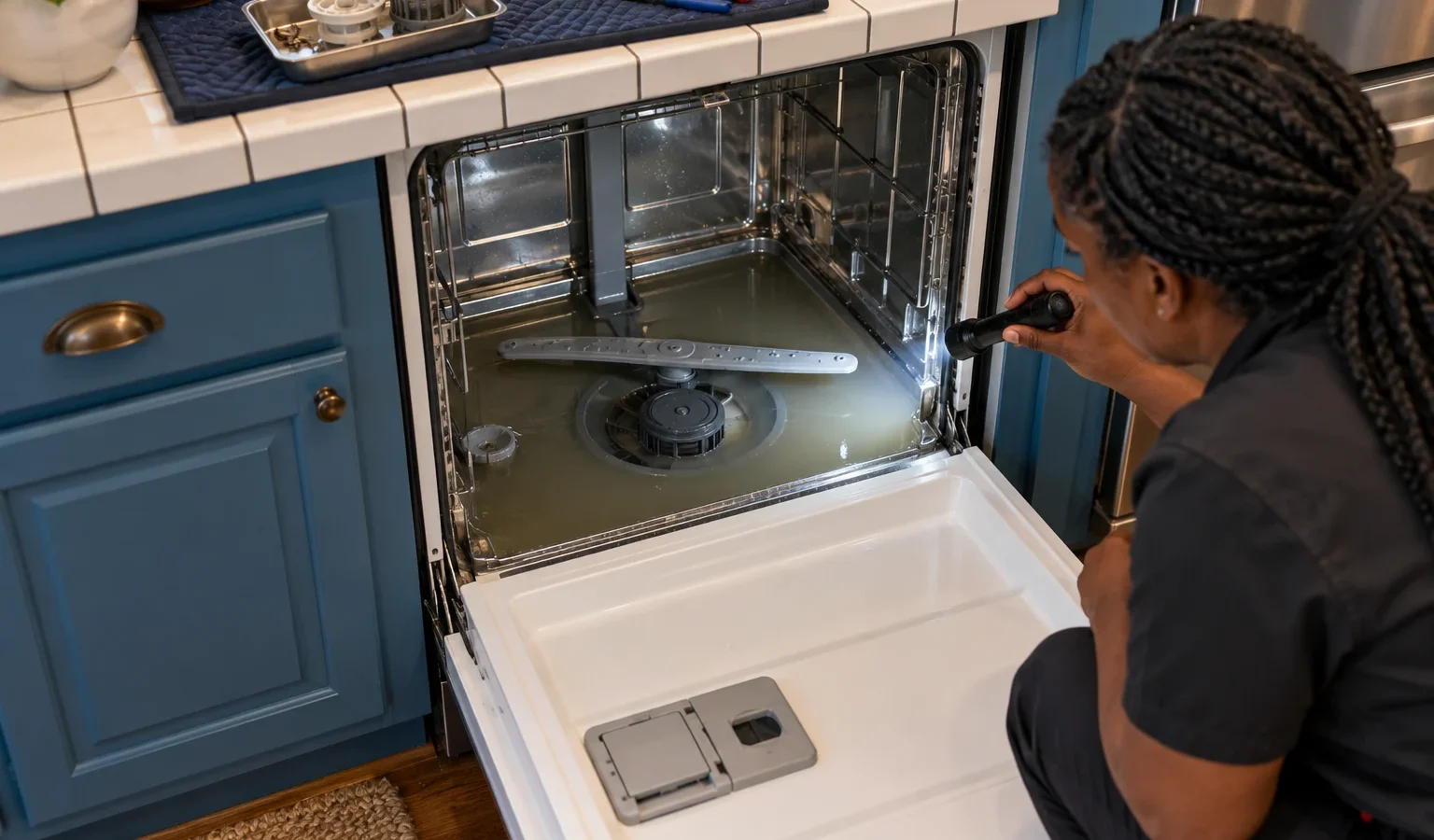
Water left in the bottom of a Whirlpool dishwasher usually traces back to a clogged filter, a kinked hose, the disposer connection or a drain pump that is not moving water.
You open the door after a cycle and find a gray pool at the bottom of the tub, with food bits floating in it. Maybe the dishwasher stopped partway and the display shows a code. In a San Francisco kitchen, where the dishwasher often shares a sink drain with a garbage disposer and the cabinet space is tight, there is a short list of reasons the water cannot leave. Most of them are visible from the front.
A drain pump pushes wash water out of the sump, through a check valve and up a hose. That hose rises into a high loop under the counter, or goes to an air gap on the sink deck, and then connects to the disposer inlet or to the sink drain line. Anything that interrupts that path, from the filter at the bottom to the final connection at the trap, leaves water in the tub.
Building codes and installation habits differ, but the idea is the same: wastewater from the sink must not siphon back into the dishwasher. A raised loop in the drain hose or an air gap provides that protection. When an installer skipped the loop or flattened it under a cabinet, dirty water can drift back into the tub after every cycle. If you see a smell along with standing water, the connection to the disposer is a good place to ask about.
Request a visit when the filter and sump are clean, the sink drains freely, the hose is straight and the water still does not leave. A technician tests the drain pump and its motor, looks at the check valve, and checks the control signal. They also inspect the connection at the disposer and under the sink, which can be hard to see from the front.
Have the model number ready; on a dishwasher it is usually on the door edge or inside the tub rim. Tell us what the display showed and what you cleaned. We diagnose before repairing, provide a written estimate and repair nothing without your approval. See Whirlpool dishwasher repair and the Whirlpool dishwashers guide. The Whirlpool WDT970SAKZ page lists what is on record for that dishwasher.
Water that cannot leave points to a blockage in the drain path or a pump that is not working. Start with the filter and sump, then the hose and the disposer connection.
Yes. A clogged disposer, or a knockout plug that was never removed at installation, blocks the dishwasher’s water from entering the drain. Running the disposer and checking the sink is a good early step.
For F9E1 the meaning given is a long drain: the dishwasher is not draining. It describes the result, not the cause, so the filter, hose and pump still need checking.
It is better not to. Remove standing water and clean the filter first, otherwise the next cycle may overflow or leave dishes dirty.
Not always. Check the sink side and the visible connection first. If the hose is fastened behind the machine, leave that for the visit rather than stretching the lines.
Share a few details and we’ll confirm an appointment. Prefer to talk? Call us and we’ll help right away.