

Specialized Whirlpool Appliance Repair in San Francisco
Mon–Sat: 8:00 AM – 7:00 PM
Clean laundry should not come out smelling like a damp basement. Find out where the odor in a front-load washer hides and what you can safely do about it.
You pull out towels that you just washed and they smell like a damp basement. The washer itself may have a sour odor when you open the door. In San Francisco, where mild, humid weather and small laundry closets keep air moving slowly, a front-load washer can hold moisture long after a cycle ends. The smell is a symptom, not a fault in the laundry.
A front-load washer is sealed tight by design, with a rubber gasket around the door opening and a drum that sits sideways. Water sits in folds and low spots, soap residue builds up, and without air the damp turns into a film. Finding the sources is a short list.
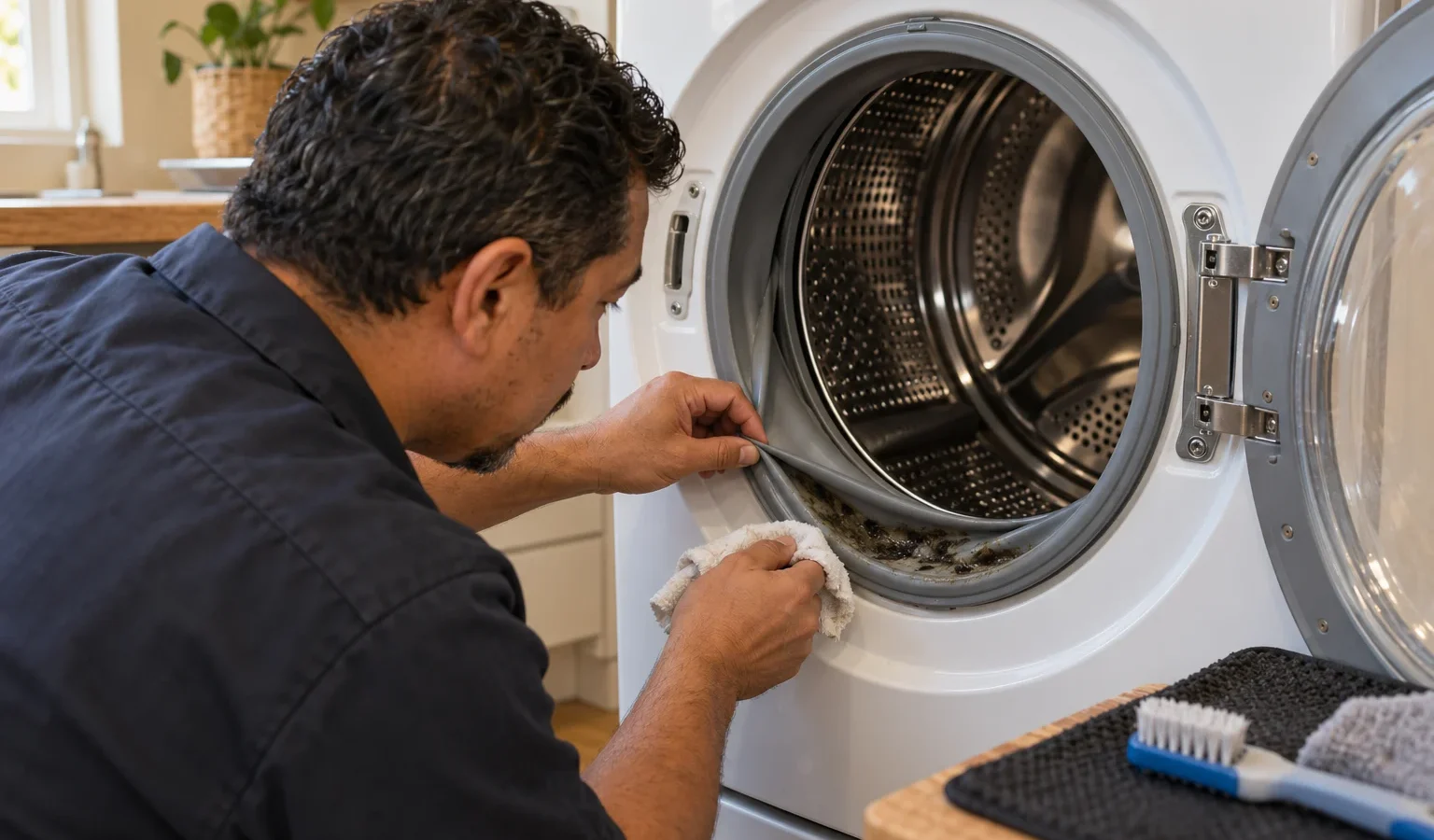
The door gasket has a deep fold at the bottom, and it collects water, lint, hair and coins. Pull the gasket lip back and look. A black or slimy film, a trapped sock or a hair tie gives you a clear answer. Wipe the fold with a damp cloth, taking care with debris, and dry it with a towel. A gasket that is torn or hardened should be mentioned to the technician.
The drain filter, behind a small door at the bottom front of most front-load washers, holds water between cycles by design. Debris trapped there rots and smells. Clean it with a container and towels in front, as covered in our article on a washer that won’t drain. Reseat it fully, because a loose filter leaks.
Residue in the detergent drawer and its recess feeds odor and can be smelled whenever the drawer is open. Pull the drawer out if it releases, rinse it, and wipe the recess. If the washer shows dET, the library describes that as the detergent dispenser cartridge not being detected, so check that the cartridge is seated.
A hose that dips too low or is pushed far into the standpipe can pull sewer air or old water back toward the washer. If the odor smells like drain rather than damp cloth, look at how the hose enters the standpipe. A loose, vertical loop at the top helps prevent backflow. In shared laundry rooms and older buildings, the building drain may contribute too, in which case the solution sits with the property manager.
Many Whirlpool front-load washers offer a Clean Washer cycle. If your washer has one, run it empty, following the instructions in your owner’s manual. The library notes that the code rL means items were detected in the washer during the Clean Washer cycle, so make sure the drum is truly empty, including socks stuck in the gasket fold.
Between cycles, wipe the gasket, dry the glass and leave the door and drawer slightly open. These small habits work better than any additive.
A burning smell is a different problem. Switch the washer off at the breaker and leave it off. A smell like rotten eggs near the drain points toward the plumbing and not the washer. A sweet or chemical smell may be detergent residue. Gas odor in a laundry room with a gas dryer is serious: leave the home, avoid switches, and call the gas utility or 911 from outside.
Do not pour bleach and other cleaners together, and do not use harsh products on the gasket. Do not remove panels to clean inside the washer. Avoid flooding the floor with a bucket of water; in a flat with neighbors below, a small leak travels.
When the smell comes back quickly after cleaning, the source is usually hidden or the habits have not changed. Check whether the drain hose has a low dip that holds old water, whether the drawer recess is still wet, and whether the washer sits level so the drum drains fully. A washer that tilts slightly keeps a pool at the low edge. A technician looks at the tub seal area, the drain path and the pump housing, places an owner cannot reach, and tells you what is holding water.
Towels and gym clothes carry odor into the machine too. Washing them without heavy fabric softener, and not stuffing the drum, lets water flow through the gasket fold rather than sit in it.
When a dryer sits above the washer in a closet, humidity pours into a small space with no moving air. Opening the closet door during and after the cycle, and keeping the dryer vent clear, helps. Our washer repair service covers those installations, and the Whirlpool washers guide explains the label spots for a model number.
The listed front-load WFW5620HW is no longer sold new, but the same sources of odor apply to any front-load design.
Book if the odor remains after cleaning the gasket, filter and drawer, if water pools around the door, if the gasket looks torn, or if the washer leaks. A technician diagnoses first, gives you a written estimate, and does nothing until you approve it.
Moisture stays in the gasket fold, the filter and the drawer. Daily use does not dry them, and an overnight closed door lets a film build.
Yes, once the cycle ends. Leave the door and the detergent drawer slightly open so the drum and gasket can dry.
Yes. Residue builds up in the drum, drawer and gasket, and gives odor-causing film a place to grow.
Usually not. It means moisture and residue are trapped. If cleaning does not help, a technician checks the drain, hose and gasket.
Leave the home, avoid switches, and call the gas utility or 911 from outside. Do not try to find the source yourself.
Share a few details and we’ll confirm an appointment. Prefer to talk? Call us and we’ll help right away.