

Specialized Whirlpool Appliance Repair in San Francisco
Mon–Sat: 8:00 AM – 7:00 PM
The washer thumps, walks across the floor or quits mid-spin with an unbalance message. Here is what the machine is detecting and how to correct it for good.
The spin begins, the cabinet starts to rock, and then the washer slows, pauses and tries again, or gives up with a message. In a San Francisco flat with older wood floors, or a laundry closet upstairs, the shaking is amplified through the building. Off balance has three possible sources: how the load sits in the drum, how the washer sits on the floor, and how the machine’s own suspension is holding up.
A spinning drum with all the weight on one side wobbles. The washer measures that wobble and tries to correct it by redistributing water, slowing down, and restarting. If the correction fails, it stops and shows a message. That is a protective step, not a sign that the washer has broken.
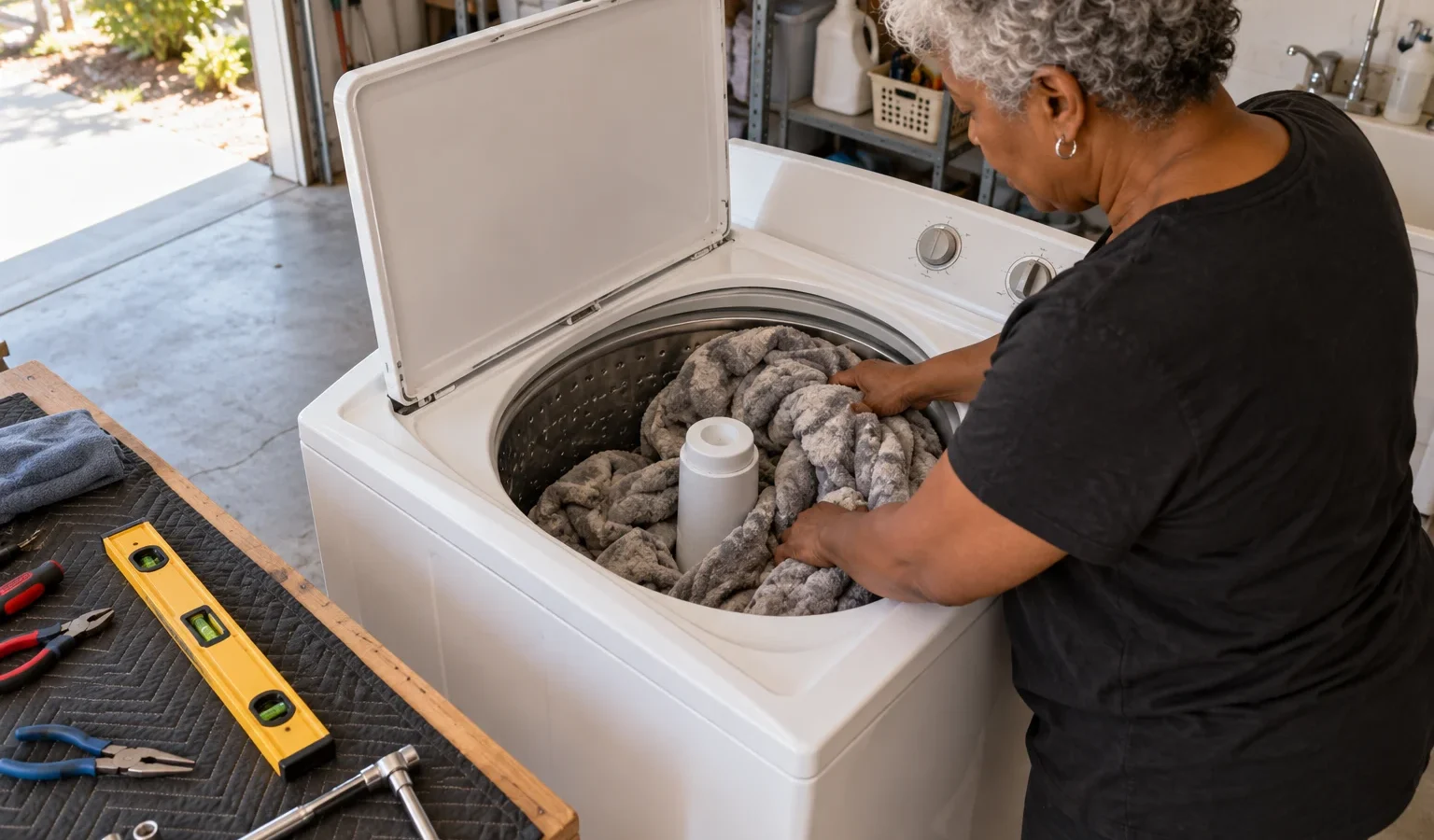
Most unbalance starts here. Heavy single items such as a bath rug, a comforter or a wet pair of jeans soak up water and weigh more than everything else. Mix them with lighter items. Wash bulky items in a smaller load with a few towels, and avoid stuffing the drum so tight that clothes cannot move.
The library describes uL as an off-balance load that needs to be redistributed manually, and ofb as an off-balance load that automated methods could not correct. For F0E9 on top-load washers, the entry is an unbalanced load. Laundry tower and all-in-one entries include F0E5 and the washer-dryer F0E5, which describe an off-balance load detected. The common fix for all of them is the same: open the lid or door and rearrange the load.
Overloading and unbalance feel alike. If the library entry oL appears, the load is too large, and taking out a third of the items usually clears it. Remember too that wet fabric is heavier than dry fabric; a load that fit dry may be too big wet.
A washer that rocks on its feet will protest at every spin. Place a hand on opposite top corners and push down gently. If the washer rocks, the feet need adjustment. Most washers have adjustable front feet that turn to raise or lower a corner, and a locking nut to hold them. Adjust so all four feet carry weight, then confirm with a level.
On a wood subfloor, common in older San Francisco buildings, even a perfectly leveled washer can vibrate if the floor flexes. Placing the washer near a wall or a corner where the floor is stiffer helps, and so does lighter loading. For a washer on an upper floor, mention this to a technician rather than adding anything under the feet yourself.
A washer that was recently moved or installed can have transit hardware left in place on the back, and the library lists FAE1 for shipping bolts installed on laundry towers. If the unit is new to you, check the installation instructions rather than guessing. Rentals where a landlord swapped the washer deserve a second look at this.
When a dryer sits on top of the washer, a rocking washer makes the whole stack move. The same leveling check applies, but do not lean into the stack alone, and do not lift a stacked washer. If the stack moves visibly, stop using it and book a visit.
Washers hold the tub with a suspension system that damps motion during spin. Over many years, that suspension can wear, and the washer can bang even with a perfect load on a perfect floor. A technician checks the support components, the tub movement and the speed sensing. This is not an owner repair, and the cabinet should stay closed.
In a rental, repeated violent spins can loosen floor fasteners, rattle plumbing and disturb the unit below. If you manage the property, an off-balance complaint that survives load changes and leveling deserves a prompt diagnosis. It is cheaper in effort to look early than after the floor or the wall has taken the beating.
Do not hold the washer still during the spin, and do not put a brick or a folded towel under a foot. Do not run it repeatedly while it bangs hard against the wall, since you can damage the cabinet and the wall. If you hear metal scraping or see the tub hitting the cabinet, switch it off at the breaker.
An off-balance washer often also fails to spin. Our article on a washer that is not spinning explains the other causes, such as water in the tub and lid problems, which can happen at the same time.
For a deeper look, our washer repair service covers installation and diagnosis, and the Whirlpool washers guide explains where your label sits. Listed top-load units like the Cabrio WTW8500DR and the WTW4855HW can both show these symptoms.
Book if the washer is off balance with a small, mixed load, if it rocks after leveling, if it bangs against the cabinet, or if the code returns. The visit begins with diagnosis, a written estimate follows, and nothing is repaired without your approval.
A single heavy item like a rug absorbs water and weighs more than the rest of the load. Mix it with lighter items or wash it with a few towels.
A little vibration is normal. Banging against the wall or cabinet, or a washer walking across the floor, is a reason to stop and check leveling or the load.
Press down on opposite top corners. If the washer rocks, adjust the feet until all four hold weight, then check with a level.
Yes. If a small mixed load on a level floor still shakes, a technician checks the parts that support the tub.
The library describes it as an off-balance load that automated methods could not correct, so redistribute the load by hand.
Share a few details and we’ll confirm an appointment. Prefer to talk? Call us and we’ll help right away.