

Specialized Whirlpool Appliance Repair in San Francisco
Mon–Sat: 8:00 AM – 7:00 PM
A microwave that runs, hums and turns the plate but leaves food cold is a different problem from one that will not start. Here is how to sort the two.
A microwave that does everything except heat is maddening, because the display counts down, the light glows and the fan sounds normal. The cooking part is a separate system from the display, and it can fail on its own. Understanding which part is silent helps you decide whether to keep the unit or call for a diagnosis.
Begin with the basics. Make sure the door closes fully and that nothing, such as a fold of plastic wrap or a crumb on the latch, keeps it from seating. The door tells the microwave it is safe to start, and a loose latch can stop cooking while the rest of the unit appears fine.
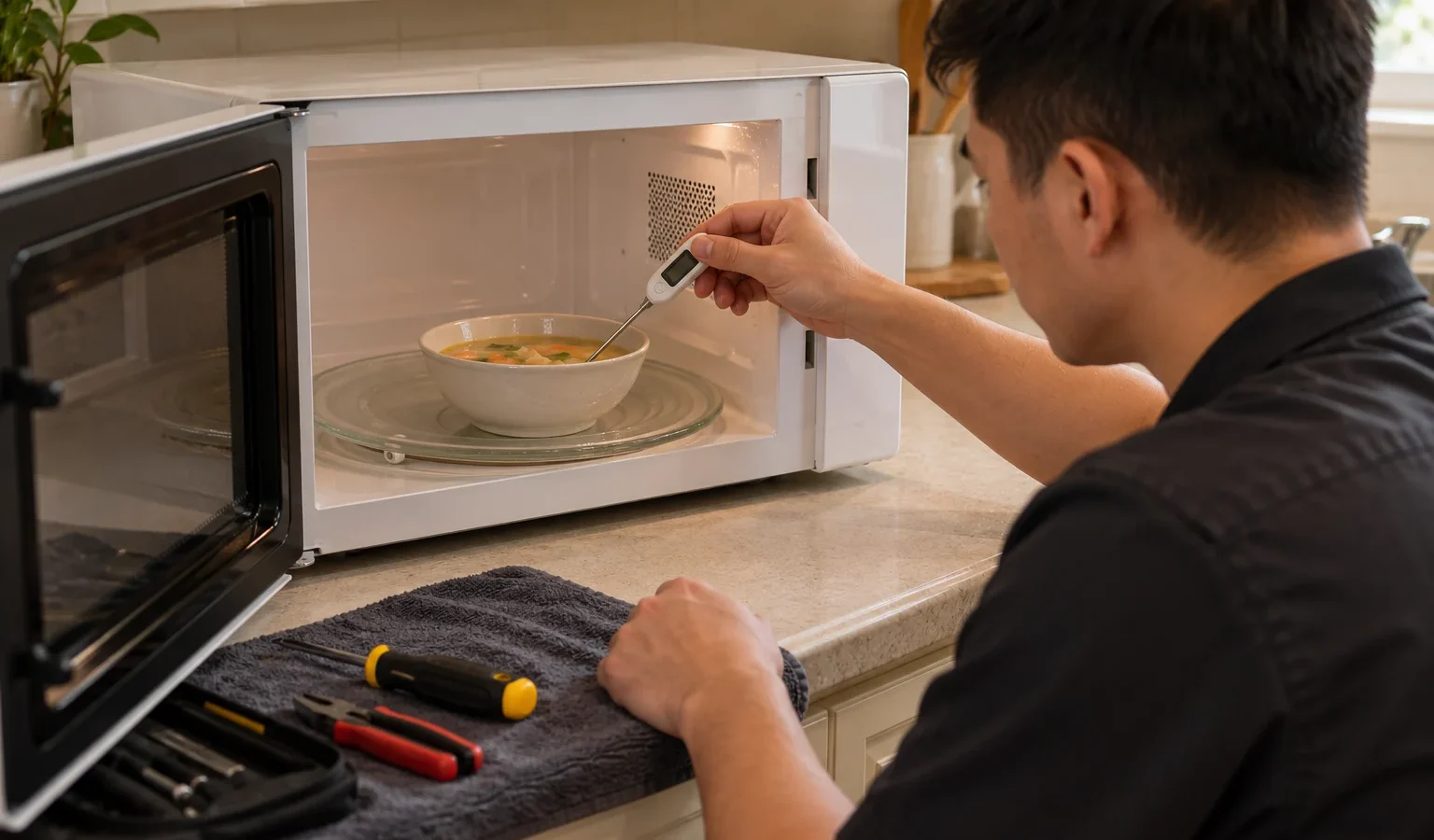
Test with a simple load: a cup of water, placed in the center of the plate. Do not run the microwave empty, which can damage it. A cup of water that stays cool after a normal cycle tells you the cooking circuit has a problem. Food that heats unevenly is a different issue, usually about how it was loaded.
Check the outlet end. A microwave that shares a circuit with a hood or another appliance can be affected by a tripped breaker or a GFCI that has popped. Reset a tripped breaker once. If the unit dims, buzzes or trips again, stop and book a visit.
If the display shows a code, write it down exactly. Whirlpool’s published list for over-the-range microwaves includes entries such as E13, where the oven did not pre-heat correctly, and F7E9, which says a blocked microwave could overheat. Both are entries to read when the unit stops cooking and a code shows, but they do not replace a technician’s diagnosis.
The heating comes from a tube and a set of components that supply it with power. A failure in that path leaves the fan and lights running normally while the cavity never warms. These parts hold dangerous charge even when the unit is unplugged, which is why this is firmly technician-only work. You should never open the cabinet to look.
A microwave uses more than one switch to confirm the door is shut. If one is worn or misaligned, the unit can run the fan but refuse to cook. A technician checks them in order, since a single bent latch hook can mimic a major failure.
Microwaves include a thermal cutoff that stops cooking if the unit overheats. If the vents are blocked, the cutoff can trip, and the unit may stay cold until it cools. Over-the-range models rely on airflow around the cabinet, so avoid stacking items on top or blocking the vent openings.
In San Francisco kitchens an over-the-range microwave often shares the space with a hood vent and an outside duct, or recirculates air through a charcoal filter. A microwave pushed tight against the cabinets, or a recirculating filter that is clogged with grease, can cause overheating and cut cooking short. Wipe the grease filter and keep the vent openings clear. If the unit was recently installed or moved, the mounting and power connection should be rechecked.
Notice whether the problem came on suddenly or crept up. A microwave that gradually took longer to warm a mug is wearing out, while one that stopped cooking in the middle of a cycle may have tripped a protective part. Also note whether the sound of the unit changed: a missing hum while the fan runs is a useful clue for the technician. Renters should photograph the display and the model label and send both to the property manager, who can then approve a visit without a second round of questions.
If you see sparks, notice a burning smell, or the door no longer closes squarely, unplug it or switch off the breaker and leave it off. A unit above the range that smells of burning plastic should be shut off at once.
In our model library, WMH32519HZ is listed as an over-the-range steam microwave and WML75011HZ as an over-the-range low profile microwave. When you book, share the model label, usually found inside the cavity on the door frame or side wall. See our guide on a Whirlpool microwave turntable not turning if the plate is also stuck.
For the service overview, read Whirlpool microwave repair, and for the lineup Whirlpool microwaves. We diagnose before repairing, give a written estimate, and repair nothing until you approve it.
The fan, light and display run on a separate circuit from the cooking components. If the cooking path fails, you get a working-looking microwave that produces no heat.
No. The high-voltage components store charge even when unplugged. This is work for a technician and should not be attempted at home.
Weak heating may be a sign the unit is wearing out. Stop if you see sparks or smell burning. Otherwise it is not an immediate danger, but it is worth diagnosing.
Yes. An over-the-range unit can trip its thermal protection when airflow is blocked. Clean the grease filter and keep openings clear.
We diagnose first, then give you a written estimate. Nothing is repaired until you approve it.
Share a few details and we’ll confirm an appointment. Prefer to talk? Call us and we’ll help right away.