

Specialized Whirlpool Appliance Repair in San Francisco
Mon–Sat: 8:00 AM – 7:00 PM
Letters and numbers on a Whirlpool refrigerator display can mean a filter reminder, a power interruption or a fault with no stated cause. Here is how to read what you see.
When a refrigerator starts showing letters, numbers or a flashing light, the instinct is to search for a single answer. In practice, some indications are simple reminders, some report an event such as a power outage, and some point to a fault without naming a cause. Knowing which kind you have decides whether you need a new filter, a little patience or a technician.
Reminders. The water filter light is the clearest example. It tells you the filter has reached its replacement point rather than that something has broken.
Event reports. A power outage indicator says the supply to the refrigerator was off. It describes what happened to the food, not what is wrong with the machine.
Fault codes. Entries such as E1 or F-numbers belong here. For many of them the manufacturer’s help page gives only reset steps and no stated cause, so the display alone cannot tell you which part has failed.
Those two entries apply to bottom-freezer refrigerators, and PO also applies to side-by-side refrigerators.
Many codes appear on the manufacturer’s help site with reset steps only. The cause is simply not stated for these, and we say so rather than guess. Examples you may meet on a bottom-freezer refrigerator include E1, E2, F3E1, F8E2 and F9E1. Whirlpool units often show codes in an F number and E number pairing, which is why you see strings such as F3E1.
The undercounter HI and LO pair has its own entry at HI and LO; it also falls into the group where only reset steps are given.
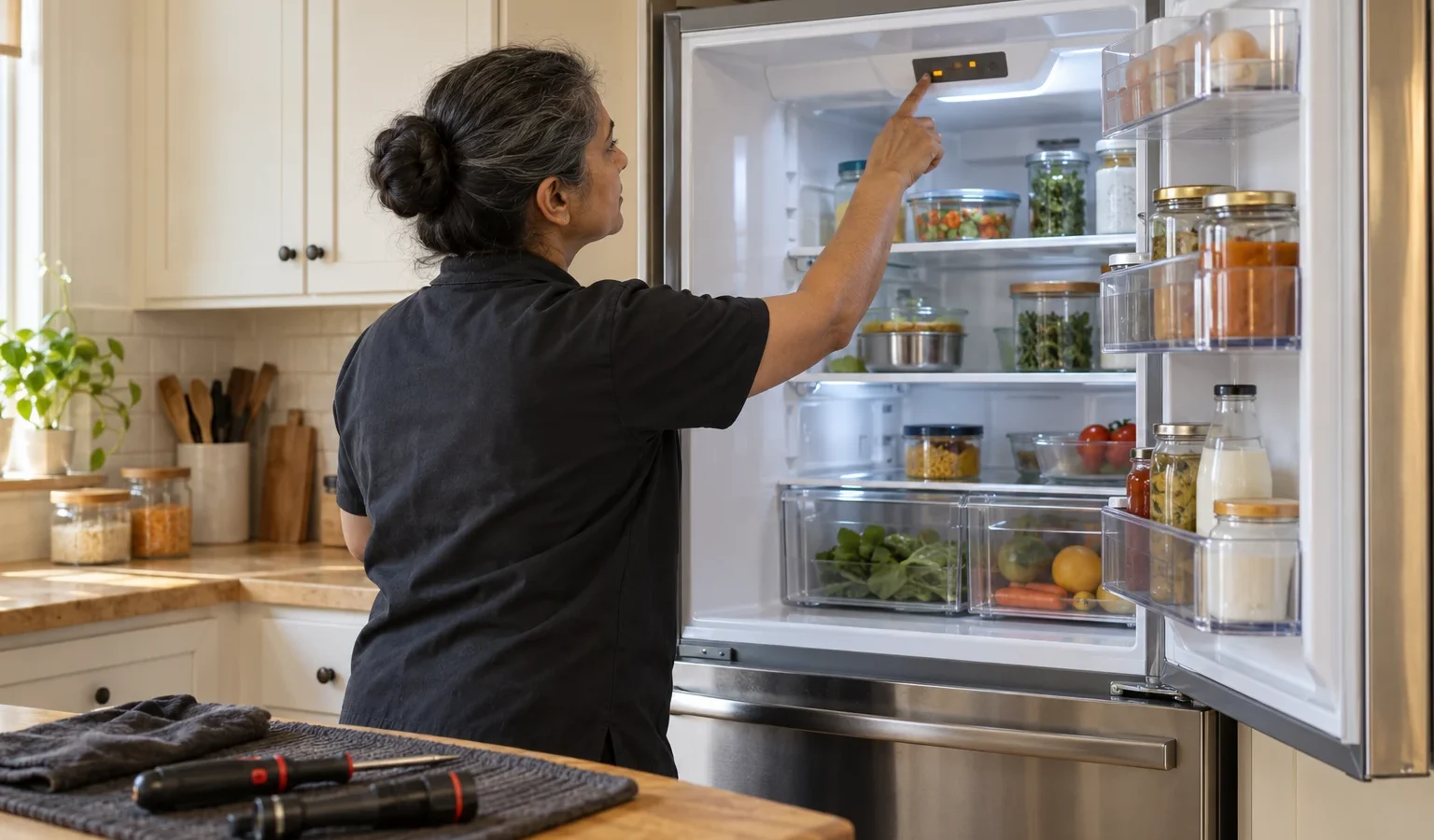
A bottom-freezer refrigerator usually shows its messages on a panel inside the fresh-food compartment or on the dispenser area of the door. A compact refrigerator in an in-law unit may have no display at all, only a dial and a light, in which case a “code” may really be a flashing light or a sound pattern, and you should describe it in words. Beverage centers and undercounter units carry their own entries, so a message that looks familiar from the kitchen refrigerator may mean something different on the unit in the pantry.
If the display is dark but the interior light works, make sure the panel has not gone to sleep. Touch it once and wait. A display that stays dark while the refrigerator is warm should be reported together with the power checks you already made.
When a tenant reports a code, ask for a photo of the display and the model number label before sending anyone. Buildings often hold several generations of the same Whirlpool refrigerator, and the same letters can belong to different platforms. A clear photo shortens the visit and keeps the tenant from trying reset tricks from the internet.
Book a visit when a code stays after one reset, returns repeatedly, comes with warm food, odd sounds or a burning smell, or when the display is blank or frozen on one message. Send the code, the model number and the photo along with your request. The technician diagnoses the refrigerator first, you receive a written estimate, and nothing is repaired until you agree.
The error code library lists more entries, and Whirlpool refrigerator repair explains how a visit runs. The Whirlpool refrigerators page covers the lineup.
PO is a power outage indicator. It means the supply to the refrigerator was off and the freezer may have thawed. Look at your frozen food and decide what is safe to keep.
No. It is a reminder that the water filter is due for replacement, which is recommended every six months, when the light comes on or as needed.
The manufacturer’s help page for those codes gives reset steps without stating a cause. A technician can test the refrigerator to find what the control is reacting to.
Sometimes a code that came from a power glitch disappears after one reset. A code that returns means the condition is still there and needs diagnosis.
Yes. The same display message can belong to different platforms, so the model number helps place it correctly.
Share a few details and we’ll confirm an appointment. Prefer to talk? Call us and we’ll help right away.