

Specialized Whirlpool Appliance Repair in San Francisco
Mon–Sat: 8:00 AM – 7:00 PM
An ice maker that stops producing can be waiting on water, cold air or a switch. Walk through the supply, the freezer and the arm before you request service.
People usually notice an ice maker problem at the worst moment: guests coming, a hot afternoon, or a lunch cooler that needs filling. A bin that looks empty is rarely a sign of a dead machine. More often something upstream has quietly stopped feeding it, and the fix depends on which of three things is missing: water, cold or a signal to run.
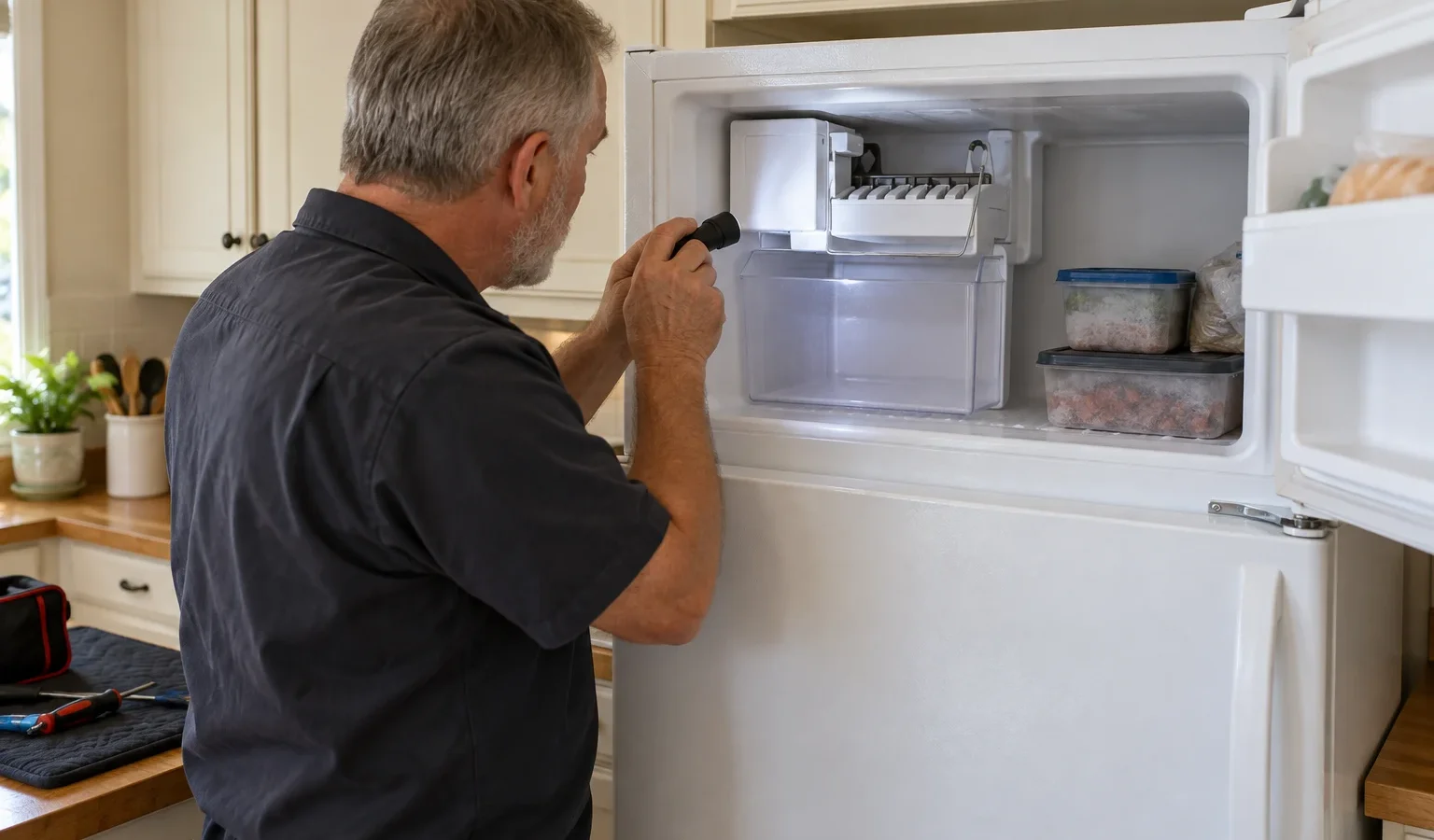
A fill valve opens at the back of the refrigerator and sends a measured amount of water into the mold. The freezer air then chills the mold until the water becomes ice. A heater warms the mold briefly, an ejector or twisting part pushes the cubes into the bin, and a sensing arm or sensor decides whether the bin is full. Every one of those steps can be the point where production quits, and each one leaves a different clue.
Inlet valve. If the solenoid has failed, the line to the mold stays dry even though the household supply is fine. Testing it means access to the rear of the refrigerator and a meter, not a guess from the front.
Frozen fill tube. Water that drips slowly freezes inside the tube. The mold then starves. Slow dripping can come from low pressure, a partly closed valve or a filter that is blocked. A technician checks the source rather than just thawing the tube, which would freeze again.
Mold heater and ejector. The unit has to warm the mold to free the cubes. A failed heater or a motor that cannot turn the ejector leaves a full tray that never empties.
Sensing arm or control. If the arm is damaged or the control no longer cycles, the machine behaves as if the bin is full.
Air problems in the freezer. Frost on the evaporator or a fan that is not moving air will wreck ice quality even when the ice maker itself is healthy.
When ice stops and you also find water on the floor, the two symptoms may share a source, such as a loose fitting or a cracked mold. Close the supply valve to the refrigerator and read the leaking water article before you try to run the ice maker again.
Request a visit if the filter and bin check out and no ice appears, if the freezer is not cold, if ice keeps forming as a block, or if water is leaking near the ice maker. Bring the model number, usually on the inside wall or the door frame, and tell us whether the water dispenser is working and what you already tried. A visit starts with diagnosis before repair, a written estimate and approval from you before any work begins.
See Whirlpool refrigerator repair and the Whirlpool refrigerators page. If you have a bottom-freezer model such as the Whirlpool WRMF3536SV, that model page lists what is on file for it.
Small or hollow cubes usually mean not enough water is reaching the mold. A partly blocked filter, a kinked line or a valve that is not fully open can cause it. Check those before assuming a bigger fault.
Give the refrigerator time to cycle through a few harvests. The mold needs to fill, freeze and release, and the first batches may be small or discarded. If nothing arrives after a reasonable wait, book service.
Yes. If freezer air is not cold enough, water in the mold never freezes into clean cubes. The cooling system needs diagnosis, not the ice maker alone.
Occasional clumping happens when ice sits unused and slightly melts and refreezes. Frequent clumps suggest uneven freezer temperature or too much water arriving.
Water supply is reaching the refrigerator, so the problem is more likely inside the freezer: the mold, the heater, the ejector, the arm or the cold air feeding them.
Share a few details and we’ll confirm an appointment. Prefer to talk? Call us and we’ll help right away.