

Specialized Whirlpool Appliance Repair in San Francisco
Mon–Sat: 8:00 AM – 7:00 PM
Puddles under a Whirlpool refrigerator come from the defrost drain, the water supply line, the filter or the ice maker. Learn how to tell them apart and what is safe to check.
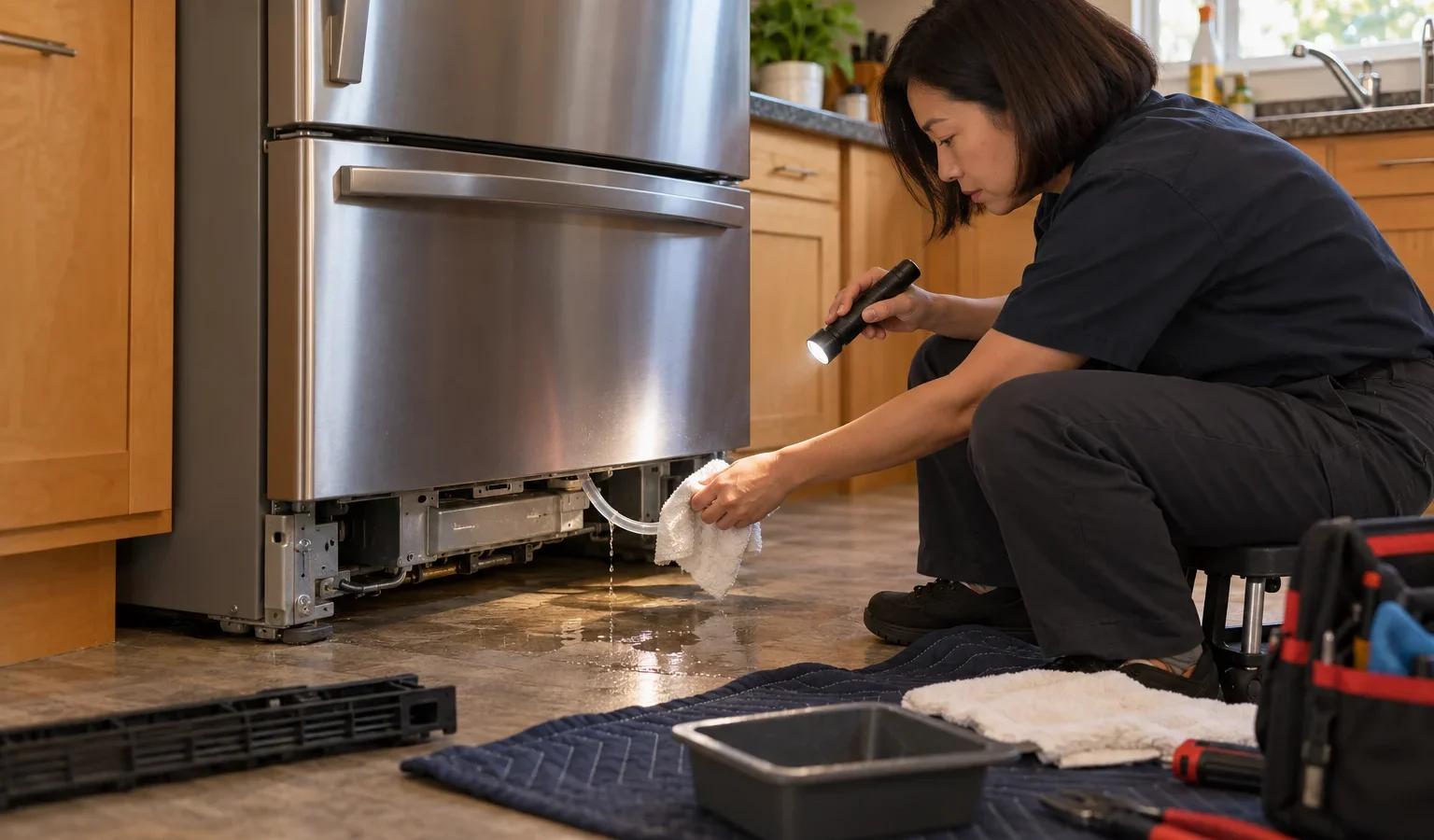
Water on the floor in front of a refrigerator is one of the few appliance problems that can damage more than the appliance. In a San Francisco flat with hardwood floors, or an upper-floor unit with neighbors below, even a slow drip matters. The good news is that refrigerator leaks fall into a short list, and the location of the water narrows it quickly.
Before you move anything, notice where the water is and how it behaves. A few minutes of observation can save a technician a lot of searching.
Defrost drain. During defrost, a heater melts frost off the evaporator coil and the water runs through a small drain to a pan near the compressor, where warm air evaporates it. If that drain freezes or collects food debris, water backs up and spills into the compartment, then out the door. A drain pan that is cracked or has shifted can spill too.
Water supply line. Refrigerators with an ice maker or water dispenser are fed through a small tube from a valve on the wall. A loose compression fitting, a pinched or kinked line behind a tightly pushed-in cabinet, or an aged tube can drip slowly. These leaks are worst in galley kitchens where the refrigerator sits flush to the wall and the line gets crushed.
Water filter. A filter that was twisted in off-line, or a housing that has cracked, can drip at the filter location. A filter due for replacement does not leak by itself, but an old one can clog and push pressure elsewhere. If your display shows the filter indicator, the H2O light page explains what that light means.
Inlet valve. The solenoid valve at the back lets water into the ice maker and dispenser. If it fails to shut fully, the line stays under pressure and can weep at a joint.
Door gasket and tilt. Warm humid air that gets past a worn gasket condenses inside. A refrigerator that leans slightly forward drains better; one that leans back can let water collect inside the door side. Sweat on the outside and drips from a gasket are not the same as a defrost problem.
Ice maker fill. If the fill tube misses the mold, or the mold is cracked, water can run into the freezer and refreeze into a sheet of ice.
If you see ice that blocks the drain at the back wall, resist the urge to melt it with a hair dryer pointed at the panel or to scrape it. Heat near plastic and wiring, and tools near the coil, create new problems.
Book a visit when the leak returns after the doors and filter check out, when ice keeps forming at the bottom of the freezer, when the supply line is wet at a fitting you cannot reach safely, or when you see water around the electrical area. Technicians check the drain path with the cabinet access they have, test the inlet valve and the defrost heater, and look for cracks in the pan or the ice maker mold.
Give us the model number if you can; it is usually on the inside wall or around the door frame. Tell us where the water appears, whether it follows the ice maker or dispenser, and whether you shut off the water. We diagnose first, give you a written estimate and repair nothing without your approval. See Whirlpool refrigerator repair for what a visit covers, the Whirlpool refrigerators overview for the lineup, and the ice maker guide if the leak and the missing ice show up together.
That spot is where meltwater from the defrost cycle tends to land when the drain is blocked. A clog or a frozen drain keeps the water from leaving, so it builds up and appears on the drawer floor or in the compartment bottom.
A clogged or poorly seated filter can leak at the filter housing or put strain on the line behind it. If your unit shows the filter indicator, replace the filter following the instructions for your model and check that it is fully seated.
If the leak comes from the supply line, close the water valve first. The refrigerator can often keep cooling without water, but protect the floor. If water is near wiring or an outlet, shut off the breaker and book a visit.
That points toward the ice maker fill, the inlet valve or the line to the unit, rather than the cooling system. Note when it happens and tell the technician.
Pouring hot water in can melt the ice for a day but it does not explain why the drain froze. The heater, the drain or the airflow behind the cause needs a proper look.
Share a few details and we’ll confirm an appointment. Prefer to talk? Call us and we’ll help right away.