

Specialized Whirlpool Appliance Repair in San Francisco
Mon–Sat: 8:00 AM – 7:00 PM
The cycle is finished or stopped, yet the lid or door will not release. Learn what the lock is waiting for, which codes relate to it, and what is safe to try.
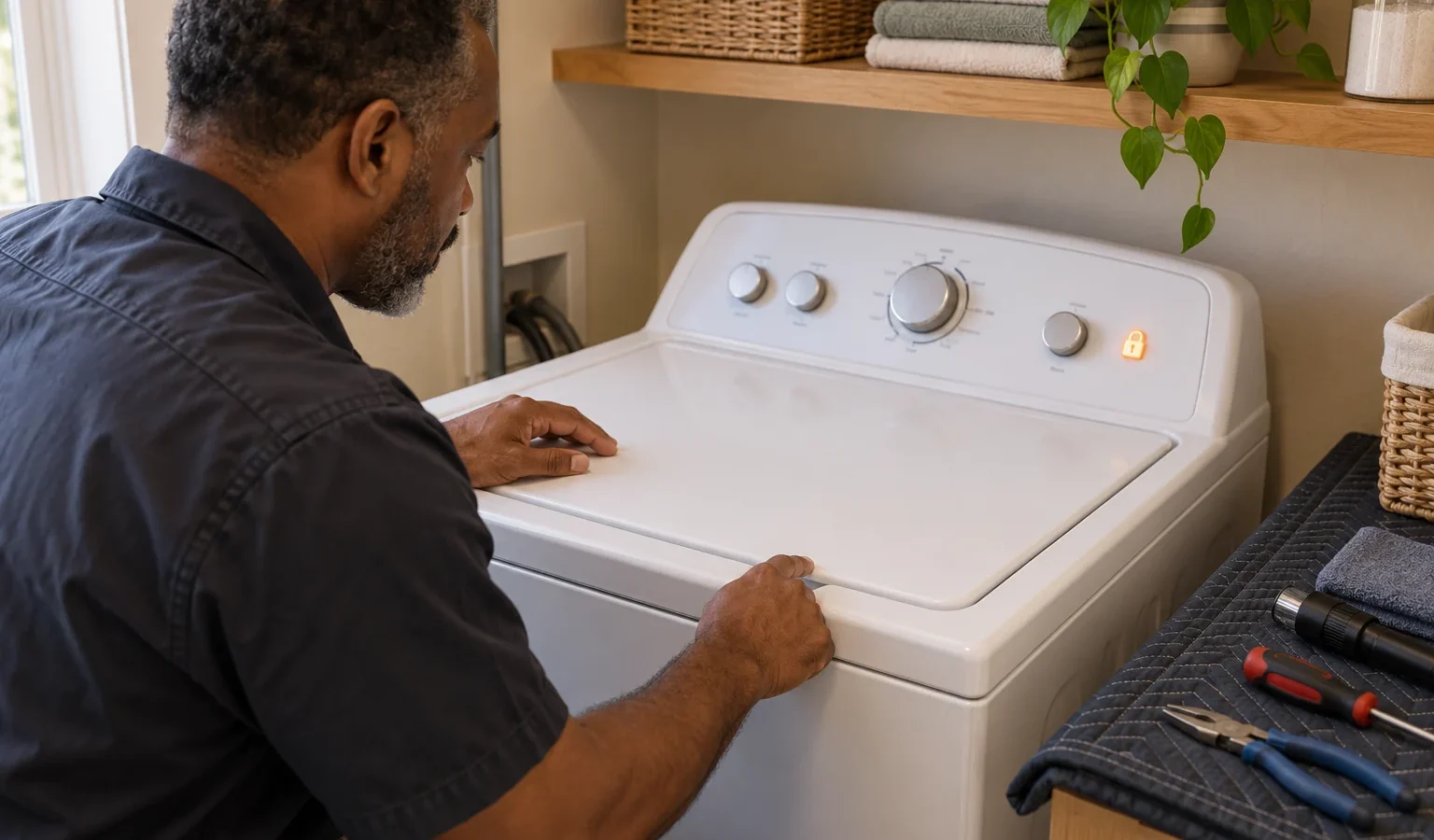
The cycle stopped, the display went quiet, and the lid still will not lift. It is an annoying way to find out that your washer takes its safety lock seriously. In a flat where the washer holds a full load of wet bedding, you want that laundry out. Before you reach for a tool, it helps to understand what the lock is actually waiting for.
A washer locks its lid or door when a cycle starts and releases it only when it is satisfied that the basket has stopped and the water level is safe. If something in that chain does not report back correctly, the lock stays engaged. That can be a harmless leftover from a power blip or a real fault in the lock itself.
The cycle is still running or just finished. Spinning baskets coast for a while. The washer will not release until the basket has stopped. If you are standing at the washer right after the final spin, give it time before assuming a fault.
The cycle was interrupted. A power cut, a tripped breaker or a pressed Pause button can leave the lock in the closed position with water still inside. The washer is waiting for a restart, a drain or both.
The lock cannot confirm the lid state. The lock assembly and its switch tell the control whether the lid is closed and whether the lock is engaged. When that report is wrong, the washer refuses to continue, and sometimes refuses to unlock. A broken striker, a worn latch or a bent hinge can cause this.
Codes give you a better starting point than guesswork. For top-load washers, the code LdL in the library is described as an item in the load that may be keeping the lid from locking. The related entries dLO and LdU appear in the same family, though LdU has only reset steps and no stated cause.
For front-load washers, F22 is described as a front door lock issue, and F5E2 as the door not locking properly. On compact front-load units, FdL is listed as the door being unable to unlock. For all-in-one washer-dryers, the library has F5E1, described as a possible issue with the door switch or door lock, and F5E2, described as a possible issue with the door lock.
Notice what these entries do not say. None of them names a defective part as a certain fact. They describe where to look. That is why a diagnosis comes first.
Do not force the lid, pry at the latch with a screwdriver, or pull the cord and try to reach into a tub that still contains water. A latch broken by force turns a diagnosis into a parts order, and a lid pried while the basket is still turning can injure your hand. Do not bypass the switch. If the washer smells hot, sparks or gives off a burnt odor, switch it off at the breaker.
If the washer is a front-load unit full of water, there is also the risk of flooding if the door is opened. Drain first, using whatever the washer offers, and only then release the door.
A front-load door has a latch that locks mechanically when the cycle starts and a small heating or release mechanism that waits briefly before letting go. That wait can feel long, but it is normal behavior in many front-load washers. A top-load lid generally uses a lock that engages the lid when the basket is about to move. Both depend on a switch that must give a clean signal.
Sticky gasket residue, detergent crust on the latch area and a door that no longer sits flush against the opening all make the lock harder to read. Wipe the gasket and the visible latch area with a damp cloth when the washer is off. Our companion article on front-load washer smell covers gasket care.
Book a visit if the lid still will not release after the washer has drained and been reset, if the code returns, if the latch feels loose or looks broken, or if the washer repeatedly locks and unlocks without finishing. Landlords with washers in rental units often hear about this one first from tenants, so a note of the model and code helps whoever is handling the request.
The visit begins with diagnosis. A technician checks the strike, the latch, the switch and the control signal, and tells you what they found. You receive a written estimate, and nothing is repaired without your approval. Our Whirlpool washer repair page covers how those visits run, and the Whirlpool washers guide shows where to find the model label, usually inside the lid rim or on the cabinet edge.
If you have the listed top-load WTW5105HW or the front-load WFW5620HW, the information above applies to those types, and the second is no longer sold new.
If the washer just finished a spin, give the basket time to stop. If the display is idle, the washer has drained and the lid still holds, a controlled restart is reasonable, and a persistent lock deserves a visit.
Do not force it. Opening a front door against standing water can flood the floor. Let the washer drain, use its drain or spin option, then check the lock again.
No. A code can point to an item stuck at the edge, a misaligned lid or a signal problem. Only a diagnosis tells you which one it is.
A single controlled reset is fine, but unplugging does not reliably release the lock and should never be paired with prying. Wait until the washer is idle first.
No. You get a diagnosis, a written estimate, and the work only goes ahead once you approve it.
Share a few details and we’ll confirm an appointment. Prefer to talk? Call us and we’ll help right away.